Styling
Wavy hair at its best
13 October 2026
There's a particular moment only people with wavy hair will recognise. It's day two after washing, somewhere between eight in the morning and the moment you step out the door. One side falls perfectly – loose, soft waves, just like in the campaigns – and the other can't decide between frizzy and flat. It's as if your hair chooses every morning which version of itself it wants to be.
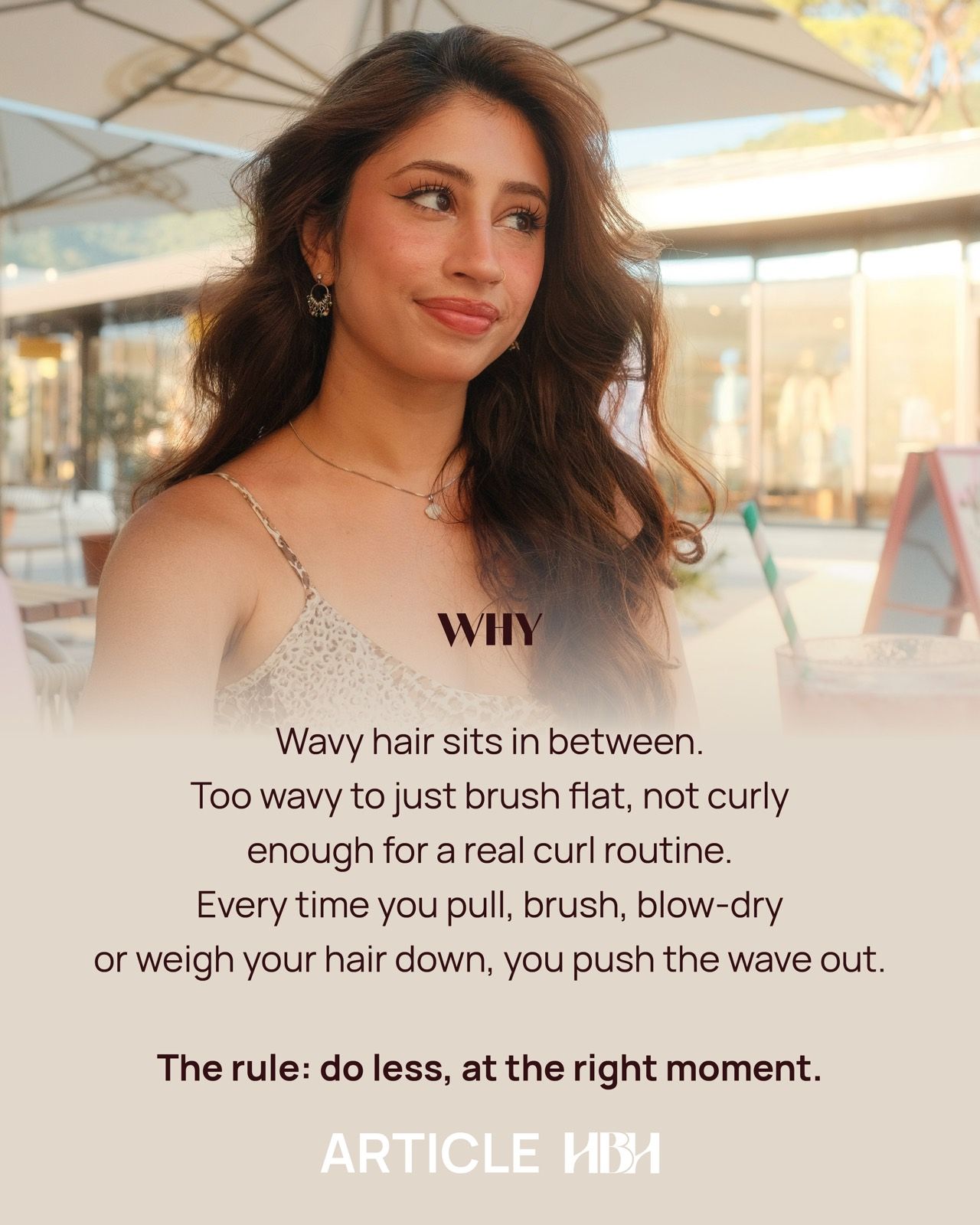
Wavy hair sits in a tricky in-between zone. Not straight enough to be done with a quick brush, not curly enough to follow a proper curl routine. For years, the advice was either to blow-dry it, or to force the wave with a curling iron. Both take you away from what your hair naturally wants to do. Most women with wavy hair learn late that their hair looks its best when you stop trying to convince it to be something else.
What makes wavy hair different
A hair strand that forms a natural wave has a slightly oval cross-section – unlike straight hair (round) or curly hair (very oval or kidney-shaped). That shape means the cuticle layers don't lie evenly and the hair reflects light irregularly. Hence the shine of wavy hair when it's in shape, and the dullness when it's weighed down or brushed out. DermNet explains how this structural asymmetry also determines where hair is driest – usually through the mid-lengths, where the bend is strongest.
In practice, that means wavy hair wants hydration without weight, definition without hold, and above all less fuss. The more you pull, brush, blow-dry or flat-iron it, the more you sabotage the natural wave.
Three heat-free techniques to bring your waves back
Plopping with a microfibre towel
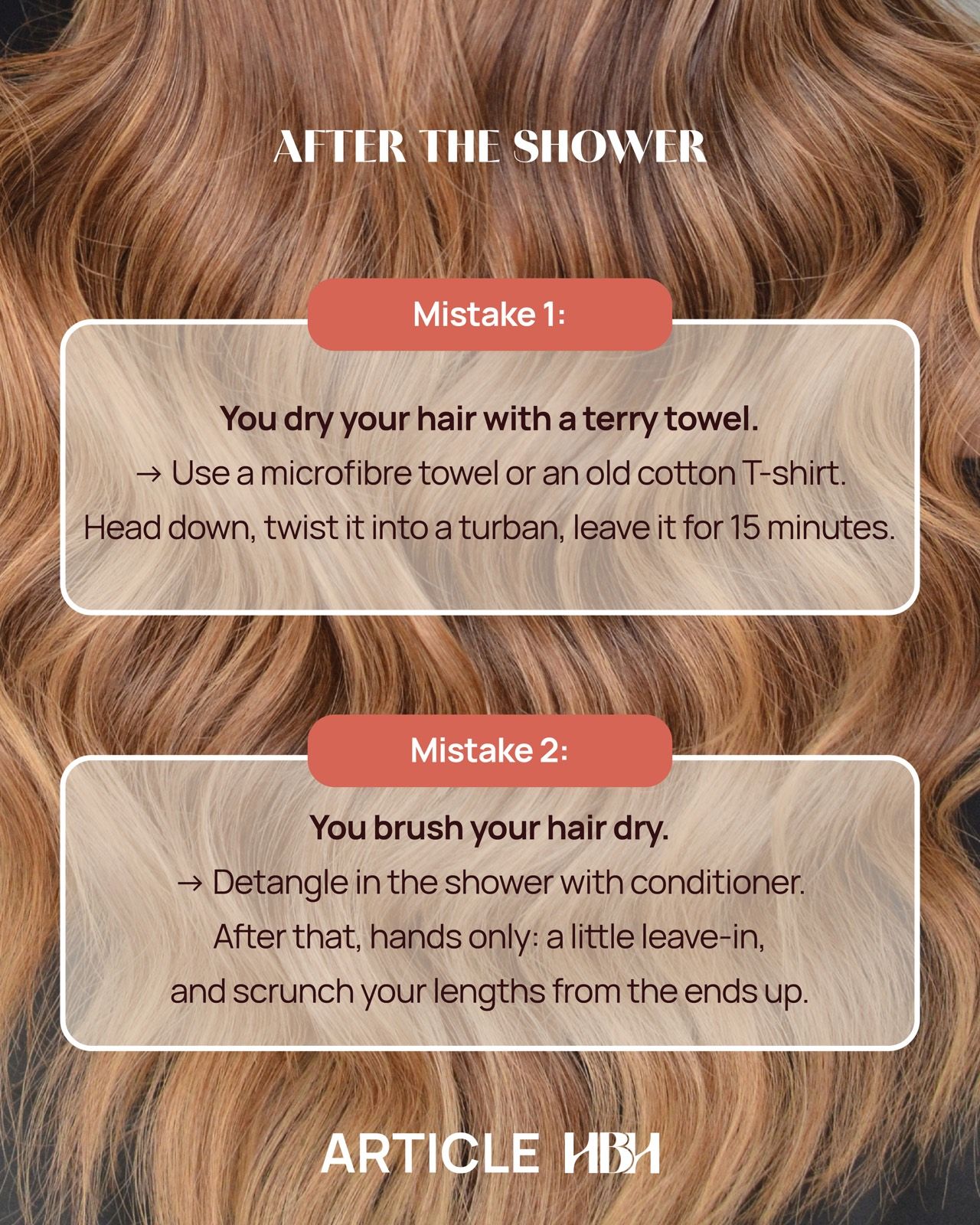
The classic bath towel is the silent enemy of wavy hair. Its coarse fibres don't just soak up water – they rough up your cuticle and break the wave pattern. Swap it for a microfibre towel or a cotton T-shirt. After washing, tip your head forward, lay the towel over your hair, gather the hair up towards your crown and tie the towel like a turban. Fifteen minutes of plopping and your wave is already halfway there. Vogue describes the technique as one of the lowest-effort ways to preserve natural texture.
Scrunch instead of brush
Brushing dry wavy hair is an open invitation to frizz. Detangle in the shower with a wide-tooth comb while your conditioner is still in, then do everything else with your hands. Scrunching – squeezing your wet hair upwards from the ends – encourages the wave to form on its own. Do it with a leave-in on your hands, never without.
Let air do what heat used to do
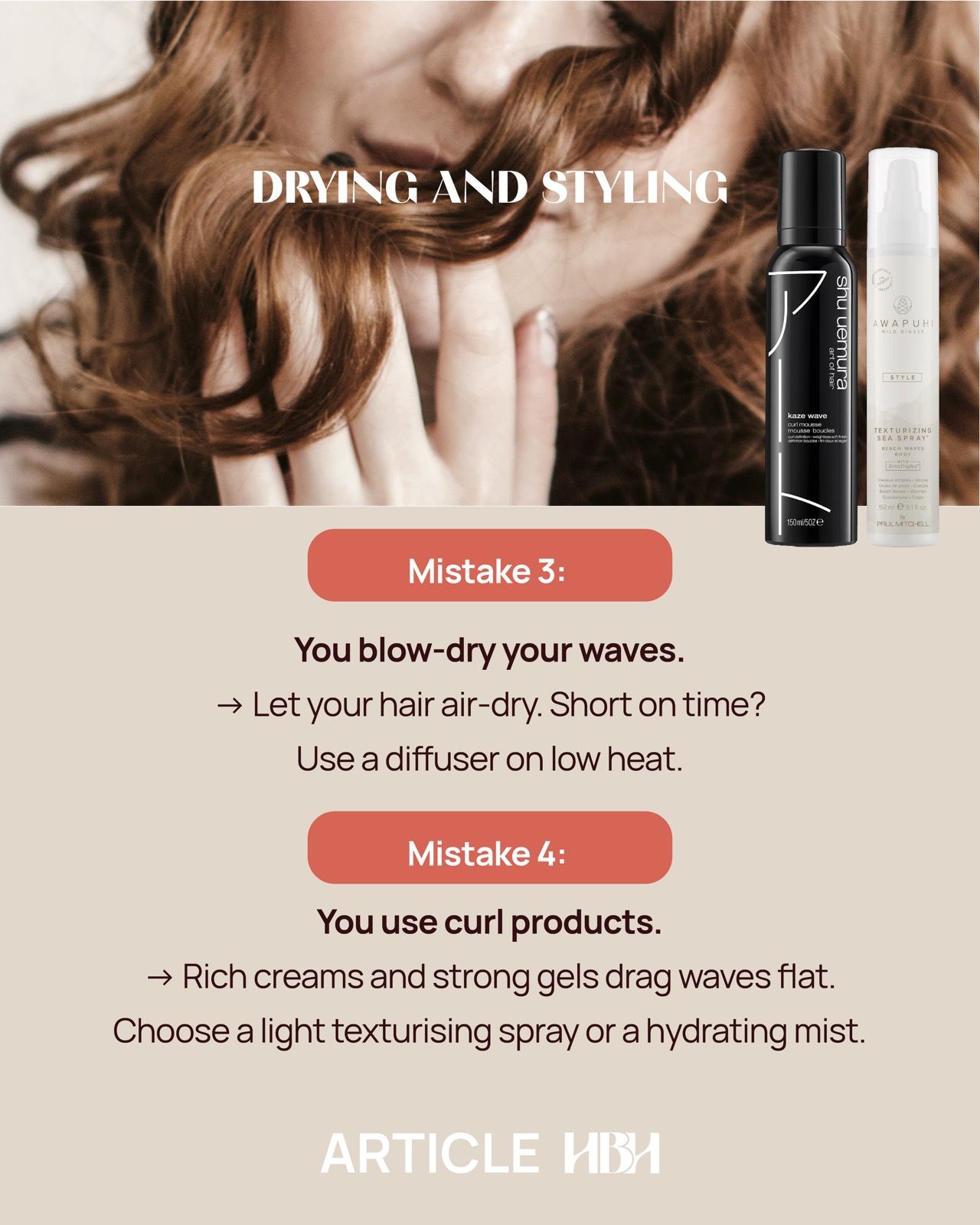
Blow-drying forces water out of the hair; air lets it evaporate. You can see the difference in the cuticle. A diffuser on a low setting can help when you're short on time – but without one, your waves look their best when you simply leave them alone.
The products that support your waves (and the ones that flatten them)
The biggest misconception about wavy hair is that it needs curl products. Most curl creams are too heavy for loose waves – they drag the wave down and leave that stiff, separated look you're trying to avoid. What you want: lightweight texturisers, soft-hold products and hydrating sprays that shape your waves without setting them in place.
A light spray like Shu Uemura Kaze Wave adds texture and definition without making your hair crunchy. If you want more hold on day two and three, Awapuhi Texturizing Sea Spray is a lovely, softer option – no stickiness, just movement.
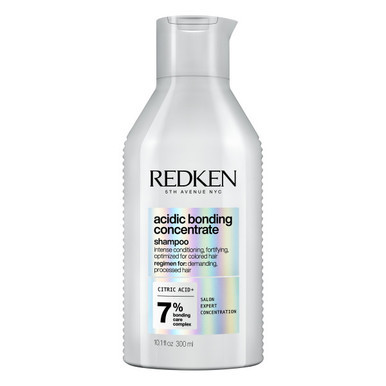
On wash day, wavy hair wants a light, nourishing shampoo that won't weigh it down. Sebastian Twisted Elastic Shampoo gives loose waves bounce without flattening them. Pair it with a leave-in such as Sebastian Potion 9 Lite, which supports fine wave patterns.
Best saved for real curls: rich curl creams and strong-hold gels. On wavy hair, they turn soft waves into stiff, crunchy strands – exactly the look you want to avoid.
The haircut that lets your waves breathe
A haircut for wavy hair differs from a cut for straight hair in one key way: layers. Straight hair can carry sharp, blunt cuts; wavy hair thrives on room to move. Ends that are too heavy pull the wave down into a flat silhouette, while layers that are too light make it frizzy.
The sweet spot is long layers that start around your face, not at the crown. A side-swept fringe that falls just above or just below your brows can softly frame an oval or long face without breaking up the volume. For mid-length wavy hair, a slightly U-shaped hemline works better than a straight cut – it gives your waves a natural fall. Harper's Bazaar names this soft layering as one of the most flattering approaches for wavy hair.
Mid-length and short haircuts can both look stunning on wavy hair – short gains movement, mid-length gains a soft, feminine fall. Long wavy hair looks best when the length is heavy enough to relax the wave, but not so heavy that it stretches it into a straight line.
What a hairdresser sees
When wavy hair isn't in good shape, we notice it in the chair straight away: a pattern of small breaks around ear level, uneven shine, and ends that feel longer than they look. Those are signs of too much heat, products that are too heavy, and brushes that are too wide.
When wavy hair is working, we notice calm movement in the fall, definition without stiffness, and a silhouette that works from the front and the back. You don't get there with more products, but with fewer interventions at the right moments. Ask your hairdresser explicitly for a cut for wavy hair – not for straight hair that gets blow-dried – and you'll get a style that works with your natural texture, even between appointments.
We also see that many women only embrace their wavy hair in their thirties or forties. Before that, they spent years straightening or curling it. The hair that comes back after a few years of gentler care is almost always the most beautiful version of itself – not in spite of age, but because they learned to let go.
A ritual for your waves
Four steps, five minutes max in your morning.
- Rinse your hair lightly with cold water in the morning (or let cold water run over your waves in the shower) – it closes the cuticle and adds shine.
- Squeeze a little leave-in through your mid-lengths and ends, not at the roots.
- Scrunch a few times with your head tipped forward.
- Let go, shake out gently, and head out.
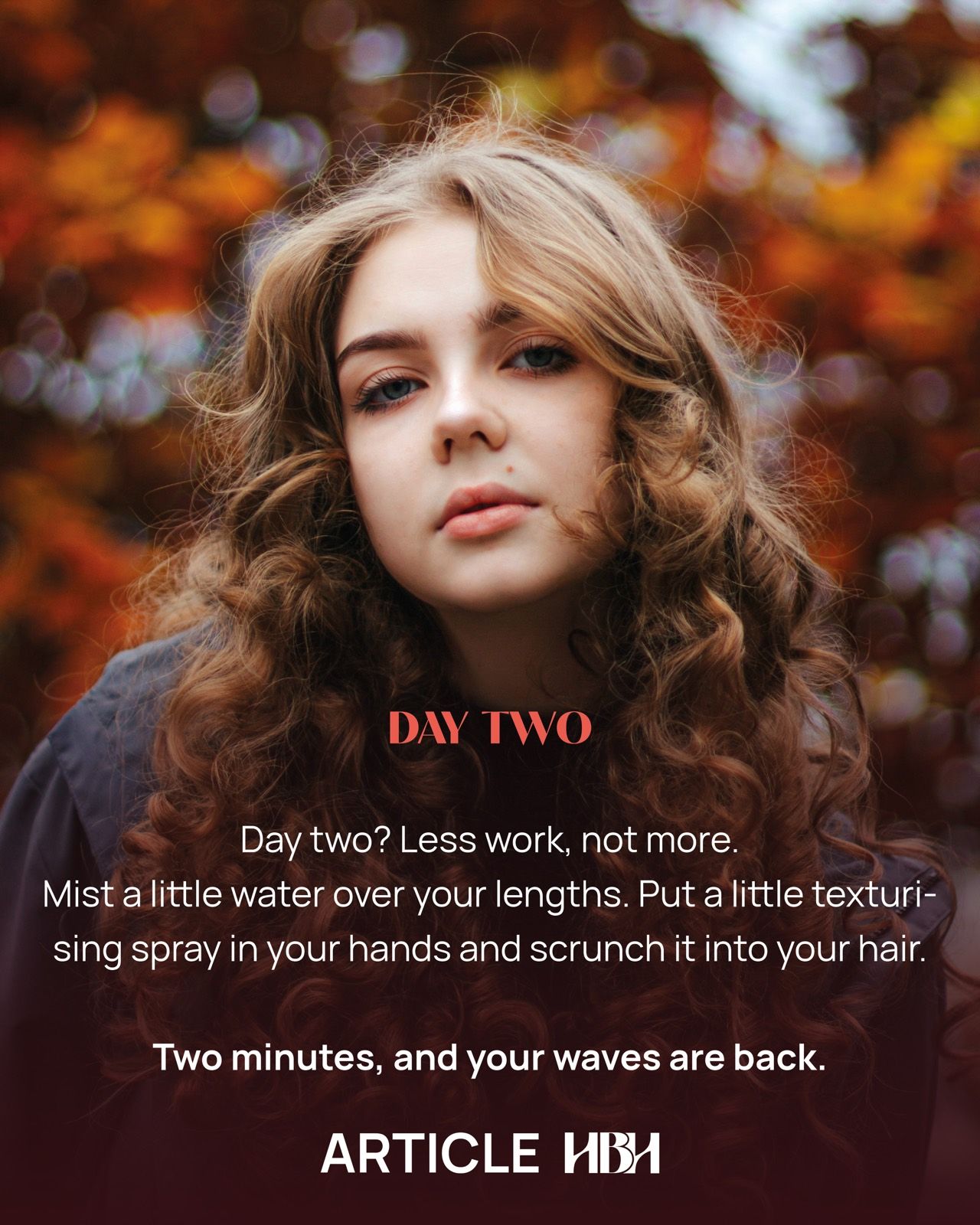
On day two and three, the work gets lighter, not heavier. A fine mist of water or a little sea spray in your hands, scrunched into your hair, brings your waves back to life. For advice tailored to your hair type, visit a HairBeautyHub partner salon – wavy hair deserves a hairdresser who understands the technique.
Frequently asked questions
What haircut suits wavy hair?
Long, soft layers that start around the face are almost always flattering on wavy hair. Mid-length cuts with a slightly U-shaped hemline give a natural fall; short cuts gain movement when the layers are well distributed. Avoid sharp, blunt cuts – they flatten the wave.
Which haircut makes you look younger with wavy hair?
Haircuts that create volume on top and soften the lines around the face usually have a rejuvenating effect. A mid-length cut with layers around the cheekbones, possibly with a side-swept fringe, visually lifts the face. Avoid lengths that fall well below the shoulders without movement – they pull the face down.
How do I get my natural waves back after years of styling?
Allow three to six months of consistently skipping heat styling, combined with an adapted wash routine and gentle care. The wave is always there in your hair fibre – it's mainly the ends, used to being blow-dried straight, that need time to recover. A professional cut that removes the old lengths visibly speeds up the process.
What haircut makes you look 10 years younger?
The most universally youthful haircut is a mid-length, layered cut with soft movement – not too sharp, not too long. For wavy hair specifically, a cut that embraces your natural texture works better than any straightening technique.