
Inspiration
Long to short hair: 5 tips to avoid haircut regret | HBH
31 August 2026
It often begins as a quiet little itch and slowly grows into an irresistible urge. Time for the scissors. The long hair that carries years of growth, care and identity makes way for something new. Something lighter, bolder and perhaps closer to who you are today.
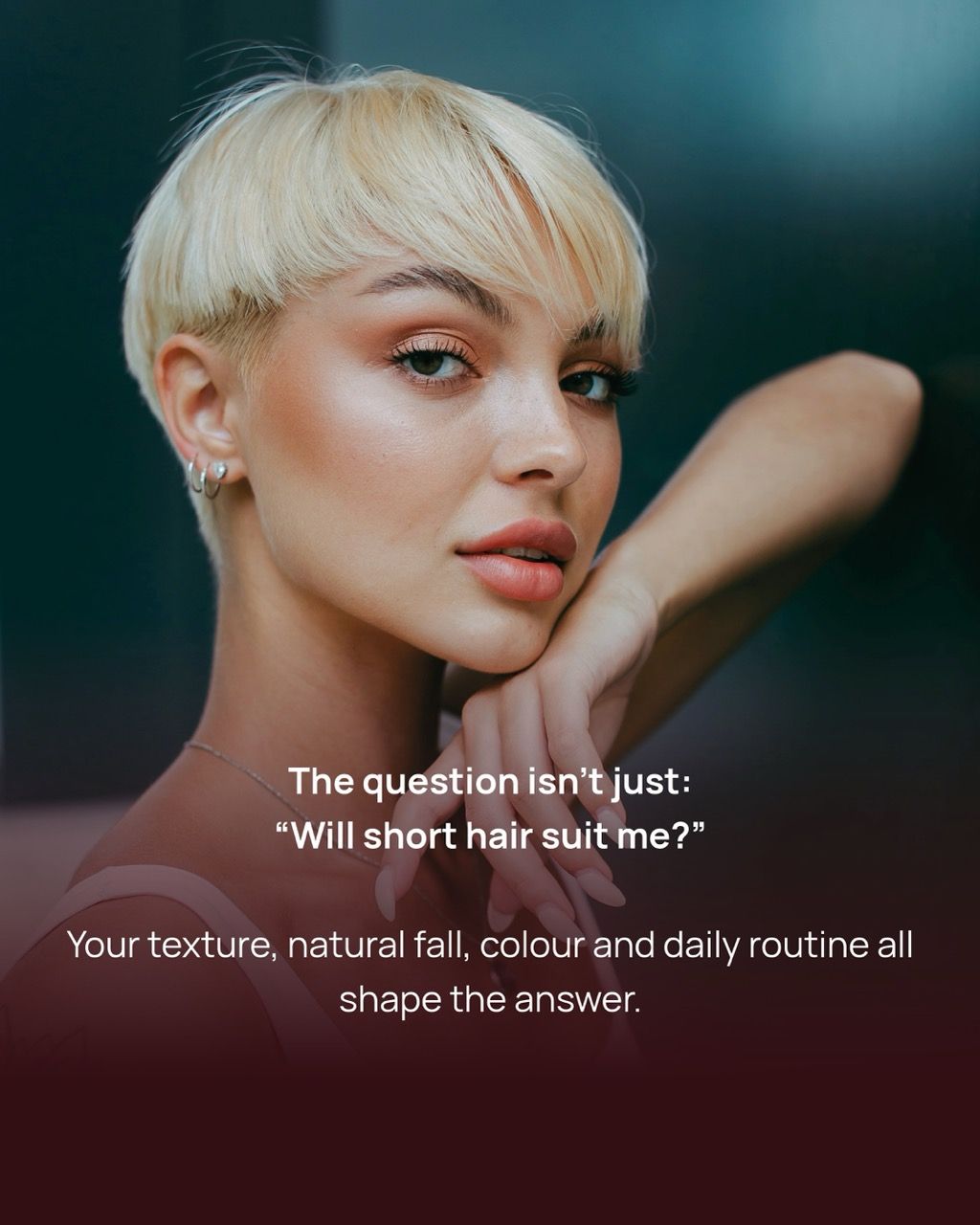
Going from long to short hair is rarely just a haircut. It can feel like a fresh start, a release or a powerful statement. At the same time, doubts are completely normal. Will short hair suit me? How will it work with my natural texture? And how much styling will it really take?
At a glance: how to prepare for going from long to short hair
- Collect photos of people with a hair texture similar to yours.
- Choose a stylist with experience in the short cut you love.
- Discuss what will happen to your existing colour before any hair is cut.
- Match your styling products to your new length and preferred finish.
- Give yourself time to adjust and plan how you will maintain the shape.
Tip 1: choose inspiration that works with your hair
Pinterest and Instagram are wonderful places to find inspiration, but a photo never tells the full story. A model’s perfect pixie may have been professionally styled that morning. A sharp bob will also behave very differently on fine, straight hair than it will on a full head of curls.
Rather than searching for a haircut alone, combine the style with your texture. Try phrases such as short bob for fine hair, pixie cut for curly hair or short haircut for thick hair. Save photos of what you do not want as well. Telling your stylist “this neckline feels too severe” can be just as helpful as saying “I love this fringe”.
Will short hair suit my face shape?
Face shape can offer direction, but it does not have to dictate your choice. Your stylist will also look at your hairline, neck, glasses, natural movement and the features you would like to highlight. A haircut becomes personal when all those elements work together.
- For a rounder face, extra height at the crown or a slightly longer, asymmetrical front can create a more elongated silhouette.
- With a strong, angular jawline, soft layers, movement or a side-swept fringe can soften the overall shape — if that is the effect you want.
- For a heart-shaped face, volume around the jaw can create balance.
- An oval face gives you plenty of freedom, although texture and maintenance still matter more than any rule.
Short hair does not automatically make you look younger. A well-placed fringe, an open neckline, soft movement or volume around the crown can, however, open up the face and draw attention to your favourite features. That individual effect is far more useful — and more interesting — than a blanket rule about age.
Let your hair texture guide the decision
The American Academy of Dermatology recommends matching your care products and routine to your hair type. The same principle applies to your cut.
- Fine hair: a compact bob or short cut with controlled layering can look fuller. Removing too much weight may create the opposite effect.
- Thick hair: a stylist can take out weight strategically, allowing the cut to move without becoming wide or triangular.
- Curly or wavy hair: discuss shrinkage, the dry shape and everyday definition with someone who understands your curl pattern. Once the weight of long hair disappears, curls may spring up and make the finished length look shorter than expected.
Tip 2: make the consultation the most important part of your appointment
You can do plenty of preparation at home, but the translation to your own hair happens in the salon chair. A good consultation is not a formality. It is where inspiration, feasibility and everyday life meet.
Do not only explain which cut you like. Tell your stylist how you live. How much time do you want to spend on your hair in the morning? Do you usually let it air-dry? Do you wear glasses? Do you exercise often? Would you like to switch between a smooth, relaxed and curly finish? Details like these determine which length and shape will genuinely work for you.
Four questions to ask before the first cut
- What will this haircut look like if I simply let it air-dry?
- Which parts of my inspiration photo will or will not work with my texture?
- Which two or three products do I truly need at home?
- How often will I need to return to maintain the shape?
If you are torn between a bob, bixie and pixie, ask whether an intermediate step makes sense. Moving from long hair to a longer bob first lets you experience a shorter silhouette without making the full leap in one go. You can always go shorter later. It is not a lack of courage; it is a smart way to get to know your new shape.
Tip 3: discuss what the haircut will do to your colour
A dramatic haircut changes more than your silhouette. It also changes the distribution of your colour. The light ends of a balayage may largely disappear, while highlights that blended softly through long hair can suddenly look stronger or more concentrated.
Ask your stylist or colourist to assess what will remain before cutting. Sometimes a subtle refresh around the face is enough. In other cases, finer highlights or a glossy all-over colour will complement the new lines more beautifully.
Chemical colour treatments can leave hair drier and more fragile. Dermatologists at the American Academy of Dermatology therefore recommend treating coloured hair gently and taking extra care around sun and heat.
At home, a colour-focused routine helps preserve shine and manageability. Redken Acidic Color Gloss Shampoo is designed to cleanse colour-treated hair gently while helping to preserve the colour. Want to understand which routine suits your colour first? Read our guide to caring for colour-treated hair.
Tip 4: build a lighter styling routine for short hair
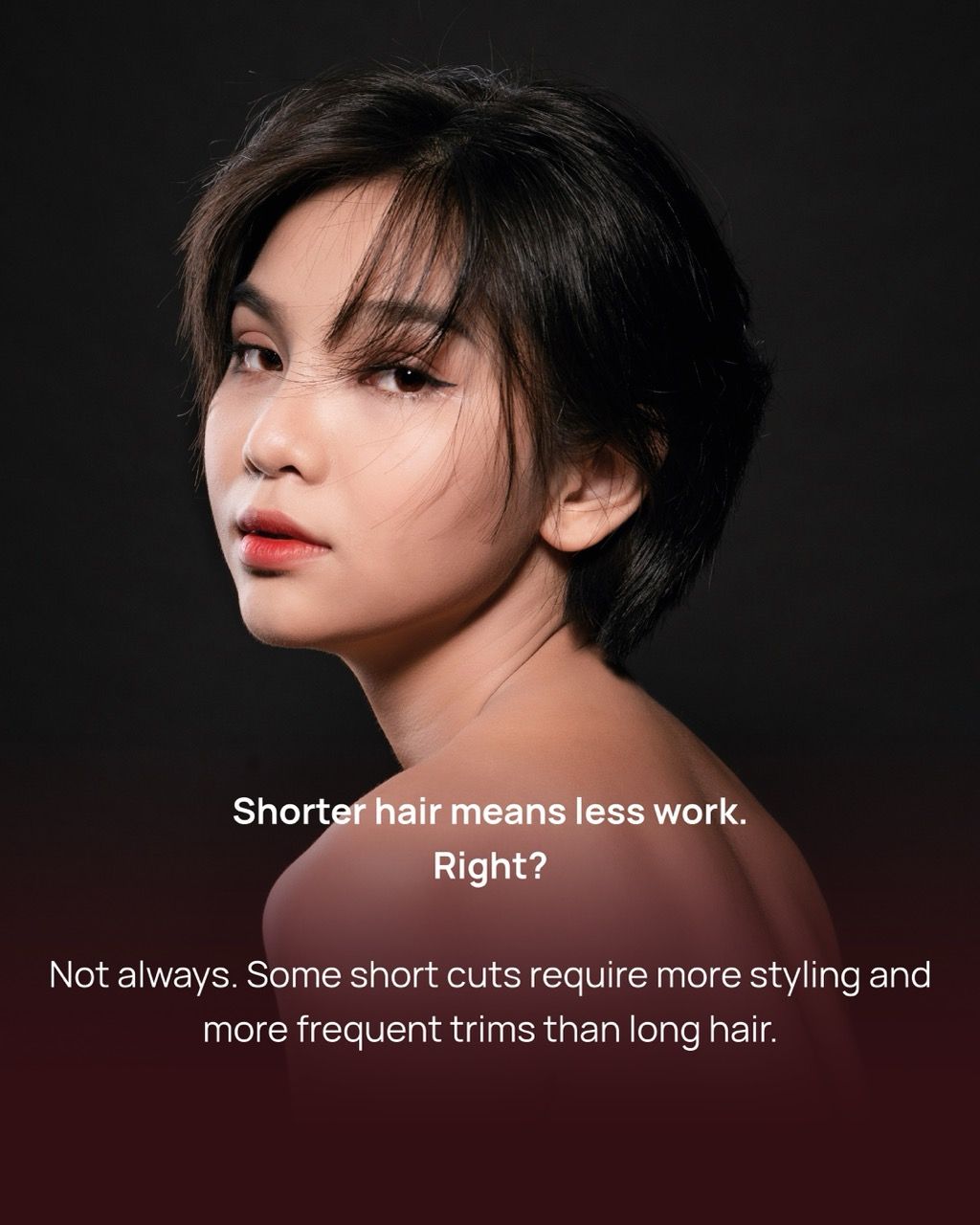
Less length does not automatically mean less work. Some short cuts almost fall into place on their own; others need a few focused minutes in the morning. The difference is rarely about using more product. It is about putting the right product in the right place.
Start small. A pea-sized amount of clay or paste may already be enough for short hair. Warm it thoroughly between your palms, then work it through dry or almost-dry hair. Too much product can quickly make a short cut feel heavy or stiff.
Choose your product according to the finish you want
- Root volume: Nioxin Root Lifting Thickening Spray adds body and offers thermal protection. Focus the application around the roots.
- Matte definition: Redken Matte Clay provides flexible hold and a matte finish, making it ideal for defining layers or a pixie.
- Airy texture with a satin finish: Paul Mitchell Spray Wax adds volume and texture while maintaining a polished sense of movement.
- Protection before blow-drying: Wella Professionals EIMI Thermal Image is a heat-protection spray with light hold and shine.
Excessive heat can damage every hair type. The American Academy of Dermatology advises using hairdryers and hot tools on a low or medium setting and allowing hair to air-dry partially whenever possible.
Not sure what wax, clay, mousse and heat protection each do? Our guide to hair products and styling will help you build a compact routine without filling your bathroom cabinet with half-used products.
Tip 5: give yourself time and plan the maintenance
That first look in the mirror can take some getting used to, even when the haircut is technically perfect. Your face may seem more open, your neck more visible, and your hands may instinctively reach for lengths that are no longer there. That unfamiliar feeling does not mean you made the wrong choice. Give yourself a few days to discover where your parting sits best and how much product you actually need.
Regrowth becomes visible more quickly in a short cut because even a few centimetres can change the proportions of a fringe, neckline or pixie. The timing varies from person to person and from one haircut to another. Scalp hair grows by an average of around one to two centimetres per month, although individual growth rates vary, according to Cleveland Clinic.
Discuss a realistic maintenance schedule at your first appointment. A sharp pixie may need refreshing sooner than a longer bob. Do not follow a blanket “every four weeks” rule: let the shape, your growth rate and your budget determine what works.
And if you decide to grow it again later, your stylist can guide that process too. By refining the contours and proportions during each in-between stage, short hair does not simply grow out — it evolves from one wearable cut into the next.
Checklist before going from long to short hair
- I have inspiration photos featuring a hair texture similar to mine.
- I know exactly what I like about the look: the length, fringe, texture or neckline.
- My stylist understands my daily routine and the time I have available for styling.
- We have discussed what will happen to my existing balayage or colour.
- I know what the cut will look like without a professional blow-dry.
- I have selected no more than two or three suitable styling products.
- I understand the expected maintenance schedule and cost.
Ready for a new short haircut?
The first step is not the scissors. It is a good conversation. Book an appointment with an HBH-certified stylist and discuss your inspiration, texture, colour and daily routine before deciding.
Would you prefer to map your hair’s needs first? Create your free MyHairBeautyPass and start with a clearer picture and advice better suited to your hair.
Frequently asked questions about going from long to short hair
How do I know whether short hair will suit me?
Short hair can work with almost any face shape when the length, volume and texture are tailored to the individual. Look beyond face shape to your hairline, neck, natural movement and daily routine. A consultation with realistic reference photos offers far more useful guidance than a generic online rule.
Is short hair easier to maintain than long hair?
Short hair usually dries faster and requires less product, but the shape may need more frequent salon maintenance. Some cuts are close to wash-and-go, while a sharp bob or pixie may require regular styling and trims.
Which short haircut works well for fine hair?
A compact bob, bixie or pixie with controlled layering can make fine hair look fuller. Avoid automatically removing too much weight: your stylist should first assess density, movement and where you want to create volume.
Can curly hair be cut short?
Absolutely. Allow for shrinkage and extra spring once the weight of long hair is removed. Ideally, choose a stylist who understands your curl pattern and discuss how the cut will sit when dry.
How often should short hair be cut?
It depends on the haircut and your growth rate. A short, precise outline will generally need attention sooner than a bob. Ask your stylist at the first appointment when your particular shape is likely to start losing its definition.