
Care
Curls that hold their shape in hot weather
04 August 2026
Anyone with curly hair knows the ritual of a summer evening. You are ready to head outside, your curls still looking exactly as you styled them that morning, and the moment you cross the threshold, you feel the humidity taking over. By the time you sit down on the terrace, your curls seem to have developed a mind of their own. The defined, glossy strands from two hours ago have turned into a cloud.
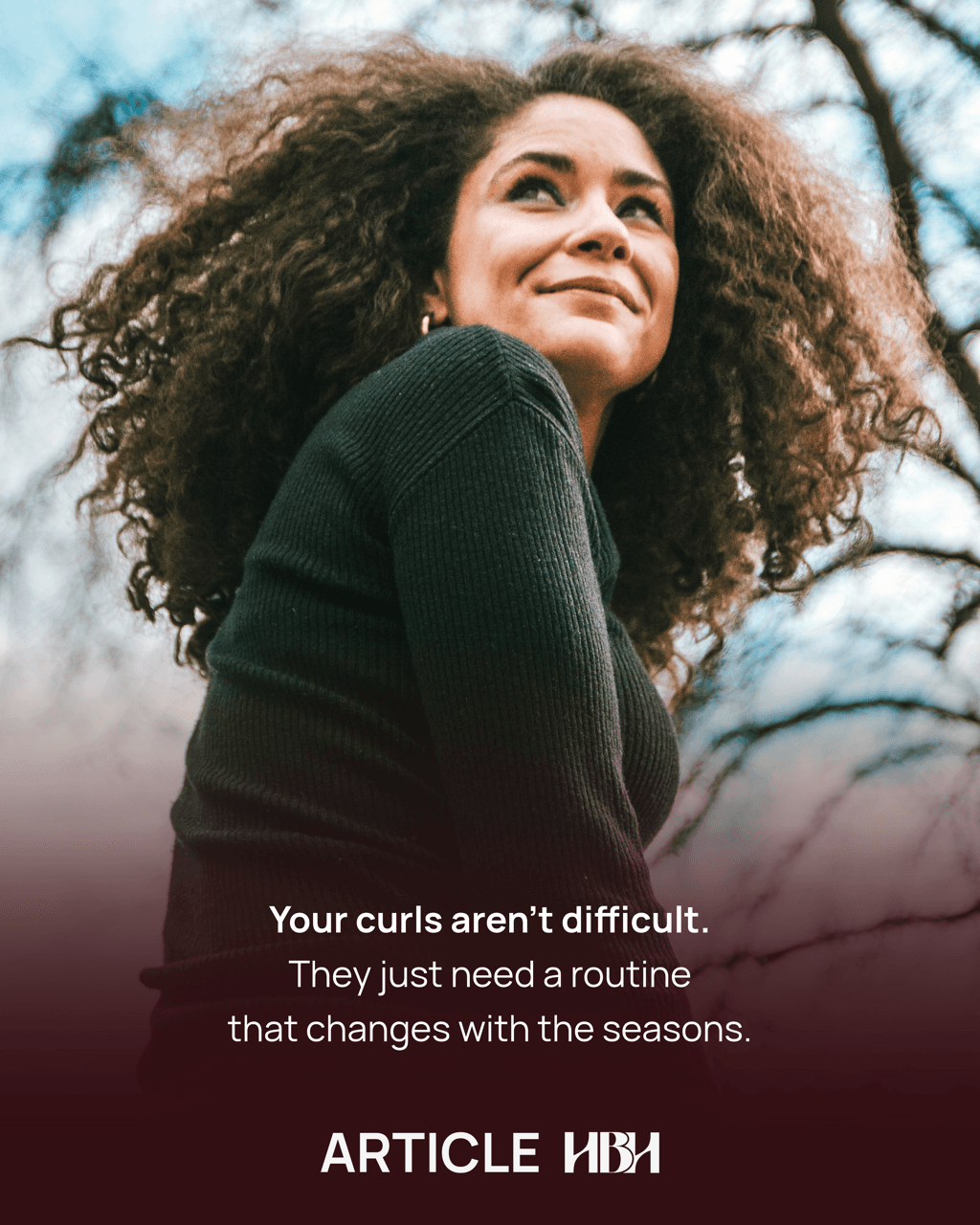
Curly hair reacts more intensely to heat and humidity than any other hair texture. Not because it is “difficult”, but because of the way it is structured: more porous than straight hair, naturally drier and with a larger cuticle surface area. The good news? Curls that hold their shape in warm weather are not the result of a miracle product, but of a routine adapted to the season. Following exactly the same routine in summer as in winter is practically an invitation to a frizz-filled day.
What warm and humid weather does to curly hair
Curly hair naturally has an oval to kidney-shaped cross-section and a more open cuticle structure. DermNet explains that this structure makes the hair naturally drier — sebum from the scalp has more difficulty travelling along the curves towards the ends — and more sensitive to humidity.
In warm, humid weather, the hair fibre swells as it absorbs water vapour from the air, causing the curl pattern to stretch and frizz to appear.
Summer brings three additional factors: UV radiation, which weakens the protein structure; salt and chlorine, which dry out and strip the hair; and perspiration on the scalp. It is a particularly harsh combination for curls that were already close to dehydration.
Four steps to keep your curls in shape
Hydrate first, define afterwards
The golden rule for curls in warm weather: hydration as the foundation, definition as the finishing touch.
A wash with a sulphate-free shampoo specifically designed for curly hair, such as Redken’s All Soft Mega Curls Shampoo, sets the tone. Follow with a hydrating conditioner or a richer wash such as Sebastian’s Hydre Shampoo, and use a weekly mask like Shu Uemura’s Urban Moisture Mask.
These products give your curls a reserve of moisture to help them get through hot days.
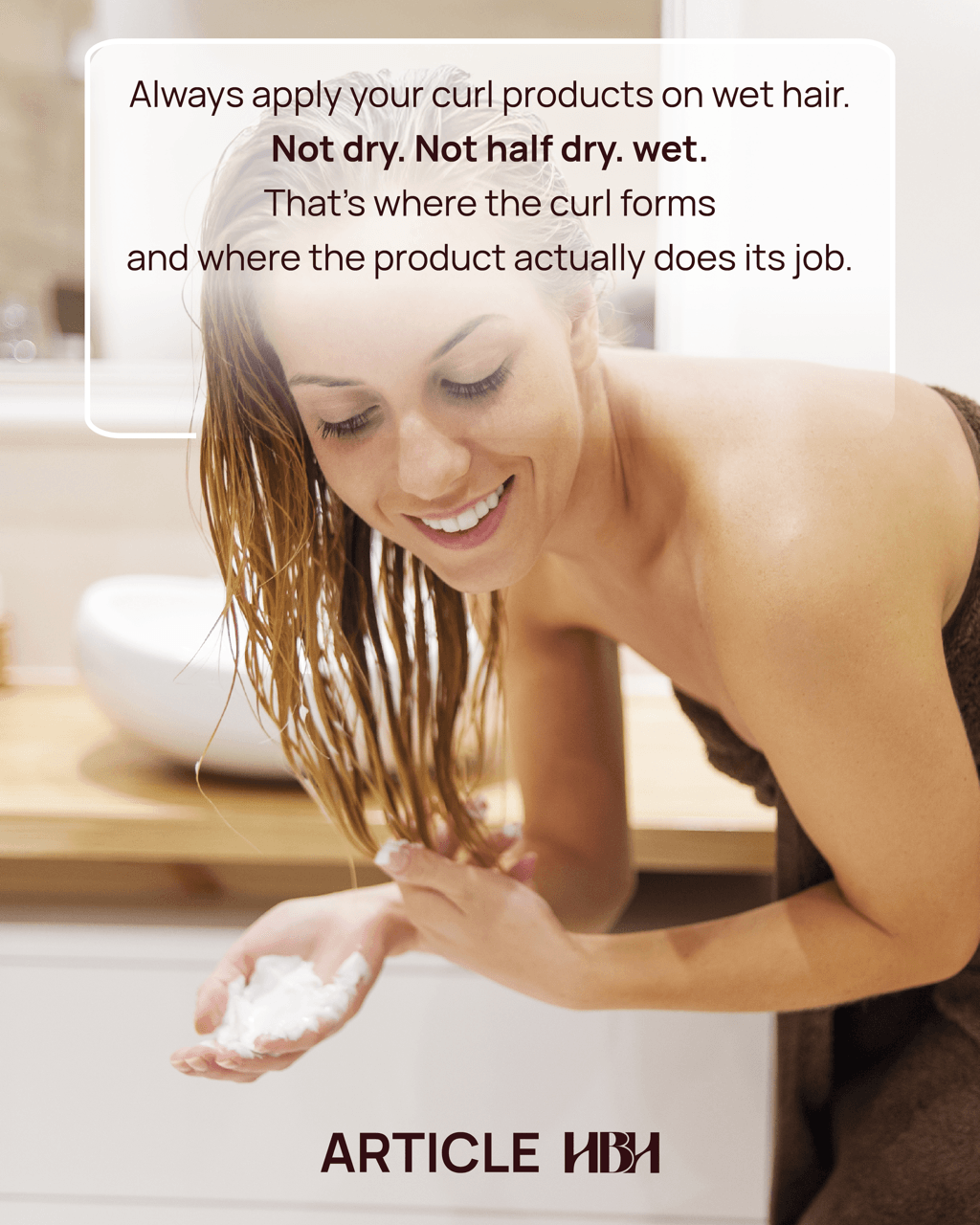
Always work on wet hair
The biggest mistake you can make with curly hair in warm weather is applying products to dry or half-dry hair. Curls take shape when they are wet. If you leave the shower with curl cream applied to wet hair, the product helps lock the shape into place.
On dry hair, however, the product stays on the surface and the definition begins to fall apart.
Sebastian’s Twisted Curl Magnifier Cream or Kérastase’s Gelée Curl Contour work best when applied in the shower or immediately afterwards: distribute the product, scrunch your curls and let the air do the rest.
Avoid the cotton towel
A regular towel is to curly hair what sandpaper is to a polished surface. Replace it with a microfibre towel or a cotton T-shirt and try plopping: gather your hair into the fabric, tie it at the crown and leave it for fifteen minutes.
This helps set the shape without rubbing. Vogue describes the technique as one of the least demanding ways to give curls more definition and calm.
Finish with an oil or serum
A final layer of sealing in warm weather can make the difference between curls that still look beautiful at four in the afternoon and curls that are already frizzing by eleven.
A few drops of Shu Uemura’s Essence Absolue Hair Oil on the ends, never on the roots, help smooth the cuticle and keep moisture inside the hair — rather than allowing humidity in.
For a lighter finish, Redken’s Acidic Color Gloss Naked Gloss Shine Oil creates an almost invisible veil of shine.
What to avoid in summer
Three habits cause unnecessary damage to curls in warm weather:
Braiding wet curls on a hot day. Your braids will not be dry by the time you go outside, and your curls will dry in a stretched shape. The definition will be gone.
Using too much heat. Curls that are already entering summer with UV and salt damage do not need additional stress from a hairdryer or straighteners. Diffusing at a low temperature or letting your hair air-dry is not a luxury in summer, but a form of care.
Touching your hair constantly. The more often you handle your curls or run your fingers through them, the more frizz you create. On a humid day, “forgetting about your hair” is quite literally the best rule: once your curls are styled, keep your hands away.
What a hairdresser notices differently
Something we often see in clients with curly hair who come into the salon in September is a frizzy halo around the crown, where the sun and salt have had the greatest impact; drier ends; and a curl pattern that looks “stretched”, as though summer has softened the hair.
The solution is not more products, but a better approach during washing and a haircut that removes the driest ends.
We also notice that many people with curly hair continue using the same products for too long. What worked perfectly in December can feel too heavy in July.
Curls call for seasonal adjustments: lighter creams and more water-based leave-in products in summer, richer butters and oils in winter. It may sound like a lot of work, but in practice, you only need to switch two or three products while keeping the same foundations.
One final observation: curls often become truly beautiful when their owner learns to accept them as they are. We see clients who have spent years fighting their natural texture with straighteners, blowouts or chemical straightening. Then, one day, they finally allow their natural pattern to speak.
What returns is almost always softer, more fluid and more enjoyable than they expected. Sometimes this transformation begins with a haircut that removes old, damaged lengths — a fresh start that allows you to rediscover your natural curl.
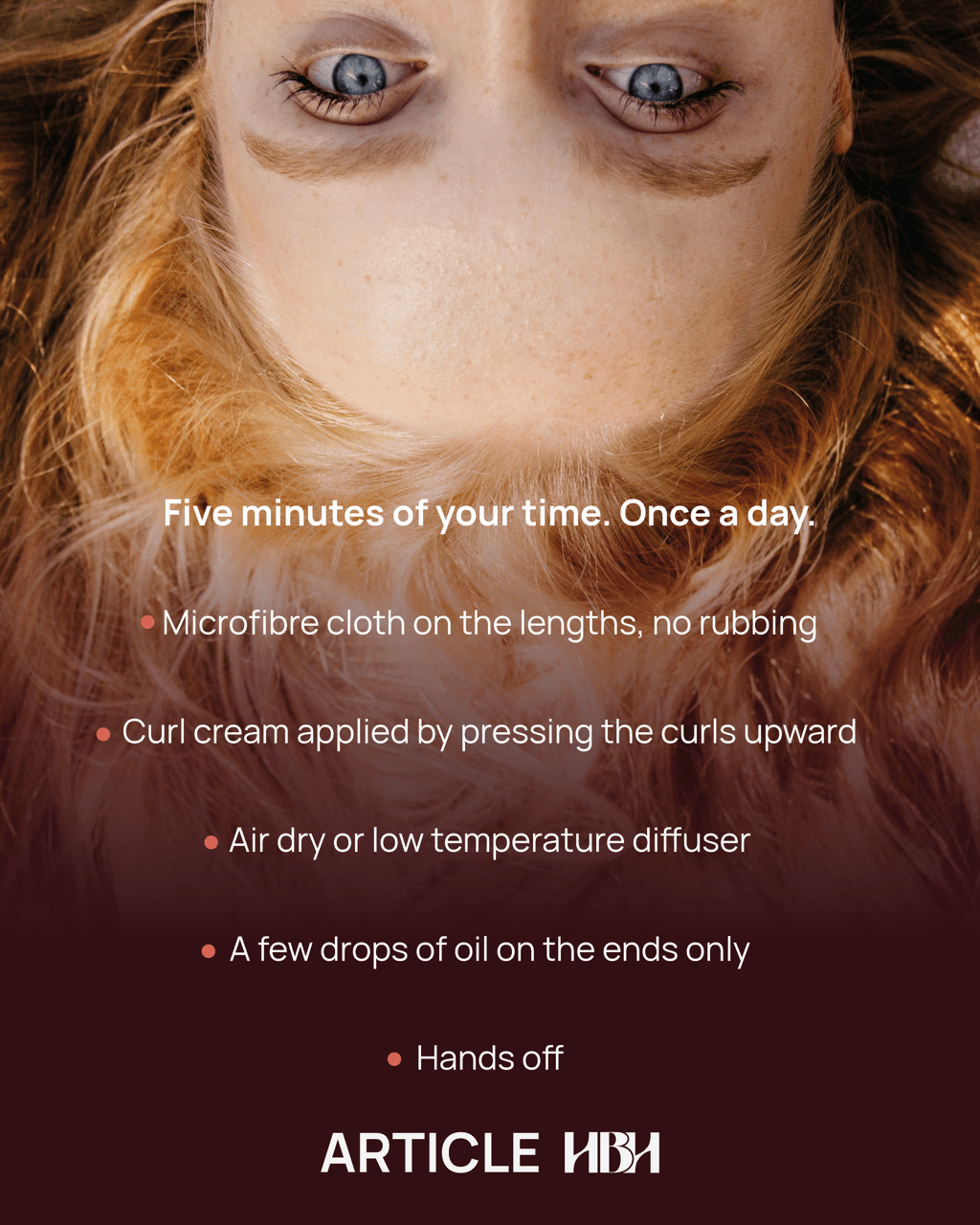
A ritual for your curls on warm days
Five steps, five extra minutes.
- Wash your hair with a sulphate-free shampoo specifically designed for curly hair.
- Hydrate generously with conditioner or a mask.
- Blot your hair with a microfibre towel or T-shirt — do not rub.
- Apply curl cream or gel to soaking-wet hair and scrunch from the ends upwards.
- Let your hair air-dry or use a diffuser on a low setting. Finish with a few drops of oil on the ends.
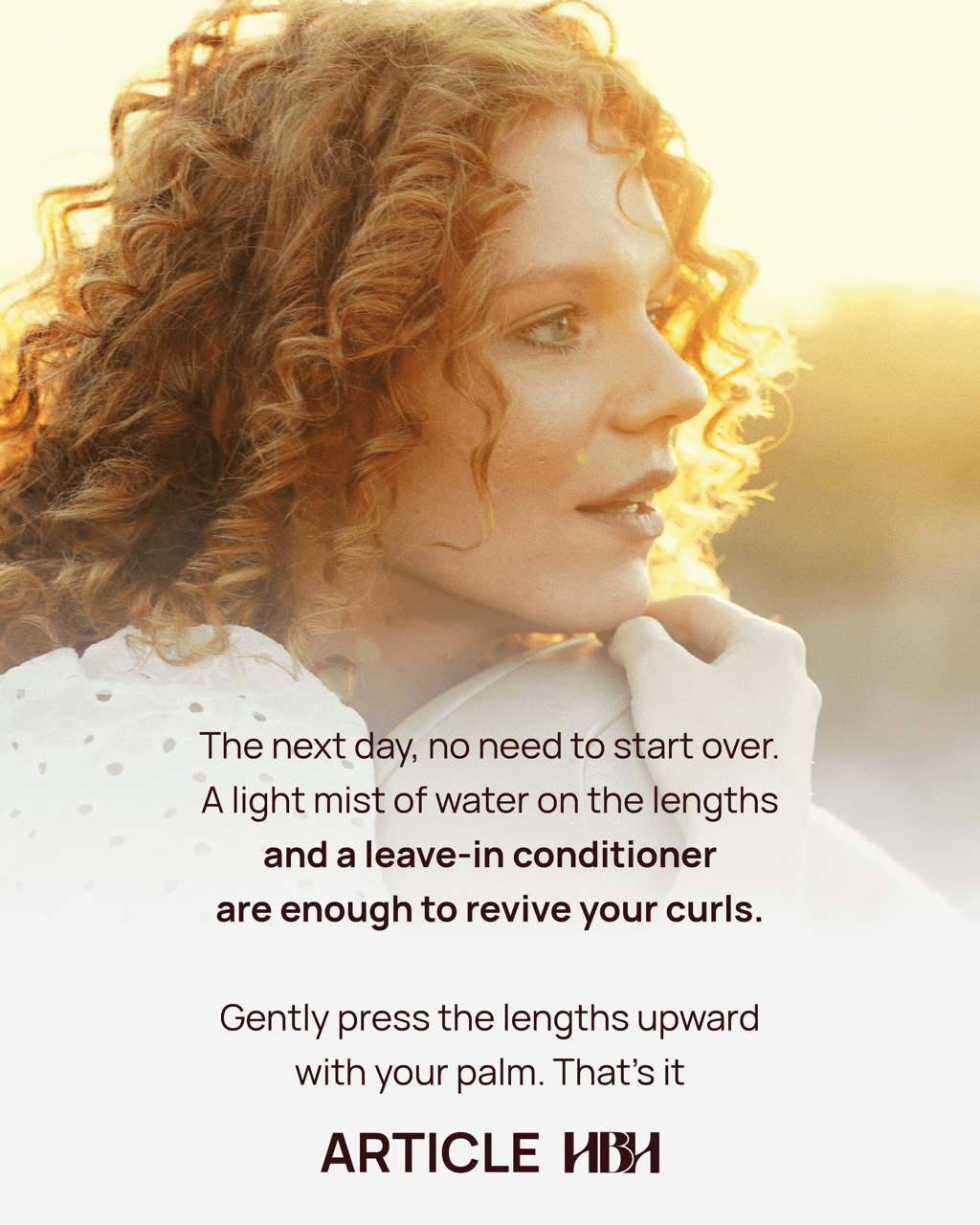
On the second and third day, a light mist of water or a leave-in spray can bring your curls back to life. On humid days, avoid all brushes and combs on dry hair — it is a direct route to frizz.
For personalised advice on the products and techniques best suited to your curl pattern and the Belgian climate, visit a HairBeautyHub partner salon, where the hairdressers work with your curls rather than against them.
Frequently asked questions
How can you reduce frizz in curly hair in warm weather?
Build hydration into your routine from the washing stage with a sulphate-free shampoo, a generous conditioner and a weekly mask. Apply styling products to soaking-wet hair for maximum definition, use a microfibre towel instead of a cotton towel and finish with a few drops of hair oil on the ends.
Avoid heat and handle your curls as little as possible.
What is the best way to care for curly hair?
The three foundations are hydration, gentle cleansing and minimal heat. Use sulphate-free products, apply styling products to wet hair, use a diffuser or let your hair air-dry and add a nourishing mask to your weekly routine.
Adapt your products to the season: lighter in summer, richer in winter.
Is cream or gel better for curly hair in warm weather?
In warm, humid weather, a gel or cream-gel hybrid usually provides better hold against frizz than a purely hydrating cream.
Those with softer, looser curls can opt for a lightweight cream. Tighter curls, or hair exposed to a very humid climate, will benefit more from a gel that helps smooth the cuticle and limit the amount of moisture entering from the air.
What should you avoid doing to curly hair in summer?
Do not wash your hair with harsh sulphate shampoos, rub it with a cotton towel, braid wet curls or use unnecessary heat. Avoid touching your hair constantly, too.
On humid days, the best rule is to “let go” once your curls are styled.